A traditional X-ray screening image is a pseudo-color image with only three colors: the difference between high- and low-energy attenuation is crudely mapped to orange, green and blue — organics in orange, inorganic mixtures in green, metals in blue. But three bands are still coarse: is that orange object a narcotic, an explosive, or just a packet of food? Is that blue mass an ordinary iron block or high-grade precious metal? The answer from FjXray’s multi-energy X-ray imaging: color every material with a finer grade — computed pixel by pixel from its effective atomic number (Zeff). In the screening industry, machines of this kind are often called multi-color security scanners: FjXray offers 4-color and 7-color palettes — more bands than the traditional three-color pseudo-color scheme and finer than the common 6-color solutions. The two images in this article were captured in these modes.
When X-rays pass through an object, photons of different energies are absorbed to different degrees, and this difference is closely related to the material’s effective atomic number (Zeff). Organic substances — narcotics, explosives, food, plastics — have a low Zeff. Metals and precious metals have a high Zeff. Ores, glass and other inorganic materials sit in between.
A multi-energy imaging system collects signals from multiple energy-spectrum channels simultaneously, estimates the Zeff value of every pixel, and maps that value to a color — each Zeff band gets its own color. What you see on screen therefore tells you which family of atoms a material is made of. Traditional three-color pseudo-color imaging only separates materials into three coarse bands; multi-energy Zeff imaging refines the classification — the leap from three coarse colors to atomic-level coloring.
Dual-energy imaging provides the foundation for material discrimination; multi-energy channels refine the classification. FjXray machines offer 4-color / 7-color material classification on a dual-energy architecture, plus a 3D display mode that operators can switch in one touch.
For the core scenarios of X-ray ore sorting machines — ore sorting, raw-material spot checks and concentrate shipment inspections — an operator can tell “this is ore, not clutter” without opening the package, and take a first look at grade distribution.
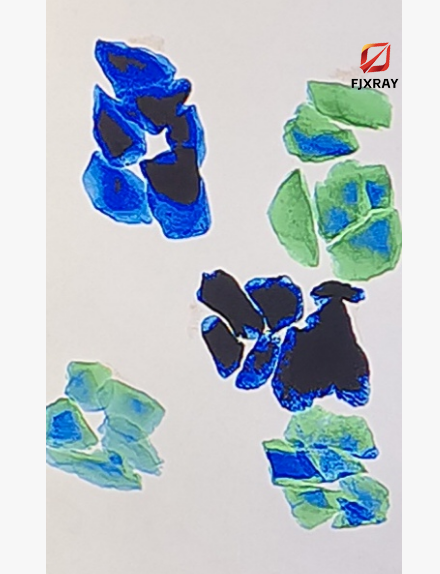 Image 1 Ore coloring (Zeff-graded imaging for X-ray ore sorting machines)
This demonstration image places the material families security screening cares about most into a single scene: metals appear in blue, precious metals in magenta, inorganic mixtures in green, organics in orange, while suspected narcotics and explosives are highlighted in a striking deep-red alarm color. Each material keeps its own color with no confusion, so operators can lock onto priority regions for review without opening every item.
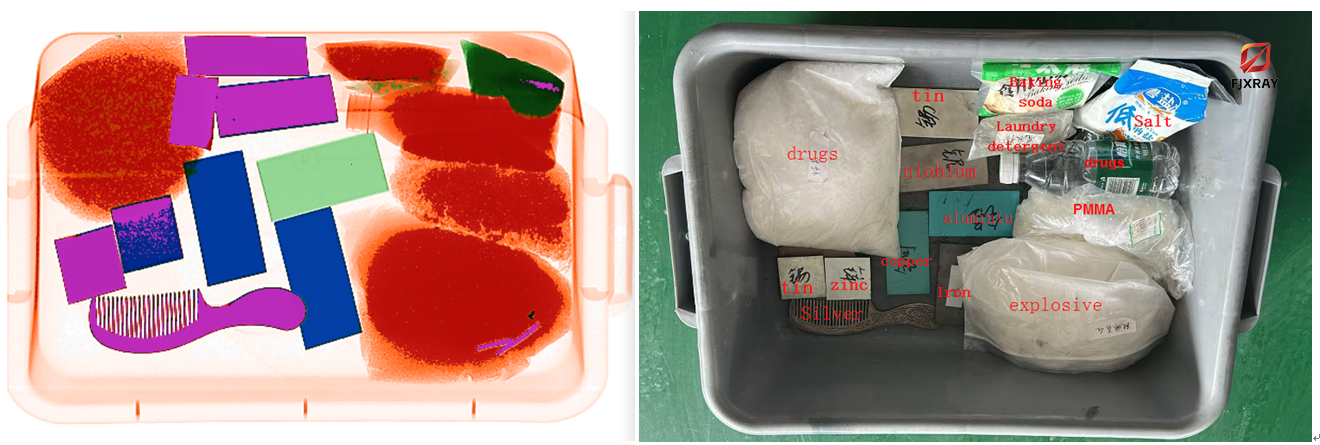
Image 2 Classification coloring of suspected explosives, narcotics and precious metals (multi-material demonstration on the 7-color multi-color scanner)
Note: the coloring in these images is a demonstration of the machine’s material-classification algorithm. In real screening workflows, coloring assists interpretation; the final call is always made by the operator, using dual-view images and standard operating procedures.
The table below is taken from the FjXray scanner specification — the official definition of the 4-color and 7-color palettes, which are the same palettes used by the two images in this article. Note that 7-color is not simply “more colors”: it adds one band at each end of the scale — Tangerine gives light organics a color of their own, and Violet gives precious metals a color of their own. That is exactly what multi-color security scanners mean by grading every material by its effective atomic number.
Material Type | Zeff | 4-Color | 7-Color | Examples |
Light Organics | ≈7 | Orange | Orange | Light organic materials |
Organics | 7–9 | Orange | Tangerine | Suspected narcotics, explosives |
Light Inorganics | 9–10 | Orange | Orange | Paper, Teflon, water |
Inorganics | 10–19 | Green | Green | Glass and common inorganics |
Heavy Metals | 19–40 | Blue | Blue | Common metal parts |
Dense Metals | 40+ | Blue | Violet | Noble metals: silver, platinum, gold |
Impenetrable | — | Red (Black) | Red (Black) | Lead, bismuth (hidden-threat flag) |
The specification also notes that impenetrable objects are shown in red (black) to flag lead, bismuth and other hidden-threat regions, and suspicious dangerous items are highlighted in a striking alarm color. Coloring assists interpretation; the final call is always made by the operator, using dual-view images and standard operating procedures.
· Faster reading: color reaches the eye before shape does — priority regions “pop out” automatically;
· Consistent results: the same material shows the same color across shifts and operators, reducing subjective variance;
· Shorter training: new operators learn the “color language” first, then the shape language;
· Better handling of clutter: combined with dual-view models, densely packed loads can be read without unpacking or repositioning.
These results come from the imaging chain of FjXray X-ray screening machines:
· Dual-energy / multi-energy material discrimination: 4-color / 7-color classification plus 3D display, switchable in one touch;
· High-resolution imaging: up to 0.8 mm spatial resolution and 32–40 mm steel penetration, balancing detail and penetration;
· A complete lineup: FX5030A/C, FX6550C, FX6550D (dual-view), FX10080C/D, FX100100C — from carry-on bags to large baggage and palletized cargo;
· Compliance: CE, RoHS, FDA and MPS (China Ministry of Public Security) test reports, deployed across airports, railways, customs, express logistics, courts, hospitals and mining sites;
· Project customization: tunnel sizes, conveyors and I/O interfaces tailored on site.
A traditional 3-color pseudo-color image has only three bands — orange, green and blue — so material classification is coarse. A 7-color security scanner grades materials by effective atomic number into seven bands — Tangerine, Brown, Orange, Green, Blue, Violet and Red (Black) — separating organics, inorganics, metals and precious metals step by step for finer, more consistent reading.
6-color schemes are usually an extension of the 3-color baseline. The FjXray 7-color grading adds one band at each end of the scale: light organics (Tangerine) and precious metals (Violet) each get a color of their own. When comparing models, check the color-band definition table in the specification rather than simply counting colors.
An X-ray ore sorting machine separates minerals by differences in effective atomic number and density. Image 1 above shows its imaging result: different mineral components appear in clear gray-to-cool graded tones. For the exact ore types, particle sizes and grade targets, always rely on sample testing — FjXray offers on-site demos and sample tests.
Each color corresponds to a band of effective atomic numbers, not to appearance. In 7-color mode: Tangerine = light organics, Brown = organics, Orange = light inorganics, Green = inorganics, Blue = heavy metals, Violet = dense metals (precious metals), Red (Black) = impenetrable objects. See the color legend table above.
No — coloring does not replace human judgment. Its job is to highlight suspected regions in a striking color so operators can review them first; the final decision is always made by the operator, using dual-view images and standard operating procedures.
Behind a colored image is a technology evolution from three coarse pseudo-color bands to multi-energy fine grading — and from density-based color to effective-atomic-number imaging. It makes screening faster and more consistent, and gives mining, logistics and other industries a way to truly “see the material”. Want a picture like this for your own operation? Contact FjXray for a demo and sample testing.
— Shenzhen Fangji Infinite Technology Co., Ltd
Brand: FjXray | Website: https://www.fjxray.com


